
florida-homesAffordable Florida housing can be an anomaly. If Florida rental laws change however, this could change. This will happen if the Florida legislature allocates funds for its State Housing Initiatives Partnership – a move that has not occurred in the last three years.

A group of real estate agents in Sarasota was informed by an affordable housing advocacy group that these funds are “critically” needed. Part of the reason for this is due to the fact that the price tag on Southwest Florida shelter is escalating at a speedier rate than worker wages. If this is not dealt with, the entire economy of Florida (along with those who live there) will be negatively affected.

Indeed, according to President of the Florida Housing Coalition, Jaimie Ross, “this is the most important fund to affordable housing in Florida. The difference between a market home and an affordable home is subsidy. SHIP [State Housing Initiatives Partnership program] is critical.”

Looking at the larger issue of Florida rental laws, Florida is actually somewhat unique in that it needs its local jurisdiction to provide affordable housing. That is usually covered through SHIP, which has funds that are set aside for housing subsidies and handed out to each county on a population-based formula. The municipality has a choice as to how to spend its SHIP allocations – from the homeless, to assisting first time home buyers, renovations needed, etc.
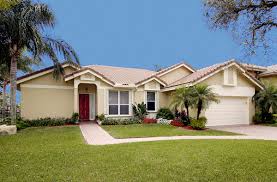
florida housingEven though it’s taken a while, today, Florida housing is in a good place.  Throughout the nation, home prices are returning to their peak prices.  Indeed, Florida housing prices increased by around a fifth in 2013.

One of the reasons Florida housing prices (along with others in America) have returned to their peak is due to an increase in hedge funds and other investors which have started aggressively purchasing residential properties in the last couple of years, buying distressed properties in bulk.   The negative with this however, is that it will leave middle-class buyers with nothing to purchase.

In Palm Beach County, Florida housing and sales have become increasingly active.  According to one realtor in the area, Jeff Lichtenstein, he has “the most [properties he’s] had at any given time,” right now, including a home listed in the PGA National resort, comprising over 5,000 homes.  He notes how South Florida housing prices escalated 21 percent last year.

condo-towersSouth Florida condos are gaining increasing popularity in the market.  This is being instigated somewhat by the newly-proposed condos in Greater Downtown Miami and Coral Gables. According to a recent Condo Vultures report, the market has increased to over 25,000.  In addition, 46 condo towers in the region have been proposed which will provide for around 13,600 condo units in the Greater Downtown Miami region.

In addition, there has been a real boom in the market of South Florida condos.  There are at least 184 new condo units with over 25,100 units at some stage of building (meaning that they are in the stage of being proposed, constructed or completed).

The last Florida condo boom began in 2003.  During this time, around 49,000 units were developed throughout the tri-county region.  The market crashed in 2007 but then remained stable.  Still, as there has been a dwindling inventory of housing in South Florida, the market is now encountering a new condo construction.  Currently, around 1,780 new condo units are still on the market in South Florida from the previous boom. But since the market crashed, four new condo projects were completed in South Florida.  A further 45 buildings are currently under construction.

no-smokingFlorida rental laws may be changing in some areas.  It may soon be the case that tenants will have to make a choice – their home or their cigarettes.

From the beginning of 2014, a 49-unit rental community, Flagler Village banned smoking on the grounds as well as inside the actual units.  Other buildings and developments have also been enforcing similar bans in the last few years.  But it is quite new.  As Program Manager for the American Lung Association, Matthew Competiello notes, at the turn of the century, such a ban would have been unheard of.  But in the last five or six years there has been an increasing demand for smoke-free housing.

But there is some opposition to these rental laws.  Given that there is 17.1 percent adult smoking population in Florida, it is not easy to impose this throughout the region. As it was, in Flagler Village out of the 49 units, there were 18 housing smokers at the time the ban was imposed. Some think it’s great (like those who don’t smoke) and others are appalled at what they see as the Big Brother sentiment, arguing that is against their civil rights.

According to Florida Realtors' it is anticipated that the Florida housing market will continue growing in 2014.  While this will be at a somewhat slower pace, there will still be approximately a 10 percent increase in residential sales.  While values of homes in the region have gone up around 12 percent throughout the last year-and-a-half, this trend is not expected to continue in 2014.  Nonetheless, according to John Tuccillo, Chief Economist at Florida Realtors “home values will rise at roughly about five percent a year, which is in line with historical trends.”

Further, according to Dr. Frank Nothaft, Chief Economist at Freddie Mac, “the market has improved substantially...the amount of vacant housing oversupply (nationally) is the least in 10 years.”  He further explains that in all price point classes, its around 6 weeks for a Florida home to be on the market.  Still, he pointed out that prices are still very much lower than the peak before the mortgage crisis.  Indeed, America’s mortgage rates have shifted and there has been a report of a slight decrease to 4.42 percent for a 30 year fixed rate mortgage.  It is forecasted that in 2014, rates will slowly increase as the Federal Reserve considers tapering back its bond-buying program.

Perhaps this shouldn’t be too surprising.  Florida is a great place to live and raise a family.  Just look at its education record.  There was another increase in the state’s high-school-graduation rate this year, totaling 75.6 percent, some even getting over 90 percent of their students to commencement.  This is part of a 10-year trend of improvement.  Further, seven schools in central Florida posted graduation rates higher than 90 percent.

In addition to great school results and positive news for Florida housing the state is adding private-sector jobs at its fastest pace since the economic recovery began as seen through payroll processor ADP.  It has witnessed a further 19,450 non-government jobs in November.

So the fact that Florida housing is set to continue improving – albeit at a slower pace – is simply in line with the rest of the living standards akin to the state over the last few years.

floridaAccording to ARA Florida principal Dick Donnellan, Florida has encountered a general recovery in its “primary markets” over the last year. He pointed out that “a decline in home ownership has pushed more renters back into the market place. The economy is starting to recover, jobs are increasing, and there’s more demand for apartments.  A lot of these jobs will be obtained by younger people and they are starting to get out of living at their parents or in a two- to three-roommate situation, and they can rent an apartment for the first time because they’re employed.”

The ideas perpetrated above were echoed by senior client manager at Forum Architecture & Interior Design Inc., Andrew Roark who pointed to the continued demonstrations of growth in the region.  Florida consistently is found among the top of completed multifamily projects.  While indeed all of the larger metropolitan area are developing nicely, it seems that Miami is ahead of the curve.  As Senior VP at Colliers International South Florida says, Larry Stockton noted, “Southeast Florida (Miami in particular) is highly sought-after for development. Coastal cities along the west coast of the state have seen some improvement but have not benefited from international demand to the same degree as South Florida,” Stockton says. “Orlando and Central Florida continue to see moderate demand. Existing product has been one of the better performing asset classes over the last 12 months with vacancy rate declines and strong year-over-year growth, especially in the urban core.”

Meanwhile many Florida homeowners continue to struggle to pay their mortgages, especially the elderly.  Thus earlier this week a program was launched by Florida Housing launched a program to help elderly homeowners through the Elderly Mortgage Assistance Program.  Those homeowners who are encountering difficulties will be able to receive aid in the amount of $25m.  This translates into eligible homeowners receiving a 2-year, forgivable loan of up to $25,000.

So while in general Florida housing is doing well, there are still gaps that need to be addressed.

florida-homeThere has been good news for Florida housing recently. In Broward County far fewer homes are being sold at a loss, the drop in August 2013 being 17.8 percent lower than August 2012. According to one real estate agent in the region, Ron Rosen, “there is a confidence out there that when you buy a home, it will be worth more tomorrow than what it is today.”

One of the reasons attributed to this increase in Florida housing prices is that investors are reselling renovated homes much more quickly. This is escalating home prices and leading to greater profits.  As a RealtyTrac Inc. spokesman, Daren Blomquist explained, “responsible flippers are serving a very useful purpose.  They make these properties better and improve the values, and as the homes sell, they become the [comparable sales to be used in the next appraisal] for other homes in the neighborhood.”

In addition, there has been a decrease in the number of foreclosures throughout Florida.  Some believe that this is due to the Florida law that came into effect in the beginning of July forcing lenders to have the paperwork before filing a case.  As Sharon Bock, Clerk and Comptroller for Palm Beach County said, “I think the new requirements that took effect July 1 are the biggest reason for our substantial decline in filings here.”

Thus with less homes being sold at a loss and fewer foreclosures in the region, news for Florida housing is definitely looking more positive.

On July 1st, new Florida rental laws came into effect that will have an impact on both landlords and tenants for both good and bad.  While landlords have the legal right to evict tenants more quickly, those same tenants will enjoy additional protections vis-à-vis security deposit refunds and leases that only benefit the landlord.

According to Boca Raton Real Estate lawyer Jerron Kelley, the Residential Landlord-Tenant Act has  resulted in the most significant changes in rental laws in over two decades.  They were made to give clarity to the rental laws, vis-à-vis “the rights and responsibilities of both sides in areas of the law that were open to interpretation.”  It is important that individual landlords become familiar with this law and the changes that it implies, especially since the rental market in the region is still “so vibrant” even after the housing collapse.

In a nutshell, the new rental laws mean the following:  a) landlords need to notify their tenants if they are planning on keeping the security deposit.  Failure to do so within 30 days will necessitate a full refund.  B) Should a tenant fail to correct a lease violation following a seven-day notice to do so, the landlord can start the eviction process without providing any other notices. C)  Landlords are now able to accept partial rent payments and evict in the same month if they give their tenants a receipt for amount paid, and then put that money in the court registry if the evictions are filed. D) Leases that require a tenant to provide up to 60 days’ notice to vacate must also include a clause ensuring they provide the same amount of time that the lease will not be renewed.

florida-coastFlorida coastal waters have been subject to substantial development over the last few decades. As a result, Florida coastal realty has become more popular, especially since tourism has grown in the region accordingly. Executive Director of the St. Augustine, Ponte Vedra & The Beaches Visitors and Convention Bureau, Richard Goldman said that they worked out more people were coming “during the recession.”  Thus vis-à-vis Florida coastal realty, Goldman noted that there was a return to occupancy levels that existed before the recession.

Looking at Florida coastal realty from a broader perspective, it seems that the entire region has encountered growth. For example, St. Johns County witnessed an increase of 7.5% in occupancy from 2009 to 2013.  What also might have escalated the Florida coast in recent times is the fact that this year – 2013 – is the 500th anniversary of when Juan Ponce de Leon “discovered” Florida.  Such a milestone definitely adds to the value of Florida coastal realty.

Perhaps thus it is not surprising that Google has partnered with Florida to map out the state’s 825 miles of beaches through its Street View Trekker technology.  For those looking to enjoy touring the state’s coast, the Trekker – a camera with 15 lenses that shoots 360 degree images every two-and-a-half seconds – would be a welcome addition.  Currently there are two teams of individuals walking the whole length of the Florida coastline to get pictures.  As Kevin McGeever, Visit Florida explained, “the entire Google view of Florida's beaches will be ready probably at the beginning of 2014.”

It is thus clear that with all the developments in the infrastructure as well as the latest technology Florida coastal realty is definitely experiencing an upswing.

ocean-driveIt seems like Florida state housing is on the upswing.  According to bankers in the sunshine state, this important upward swing could result in loan growth too and assist lending issues that escalated following the collapse of the Florida state housing bubble burst.  What has happened until now is thousands of foreclosures, due to the slump.  But currently that is changing as finally house prices are escalating with inventories diminishing across the region.

Indeed, according to President and CEO of Winter Haven, John Corbett, the Florida state housing market has “now become a tailwind for banks.  The real estate market is accelerating,” he pointed out.  He added that the inventory of Miami condos plummeted from 18 months of supply to next-to-nothing as out-of-town investors started purchasing properties.

It is not just Corbett who is optimistic about the Florida state housing market.  Chairman, President and CEO of Capital City Bank William Smith Jr. said, “Florida is on the move again.”  He pointed out how there has been a lot of land that has been selling and homes are spending less time on the market these days.

A similar experience has been encountered in Destin, Florida.  According to John Allison, Chairman of Home BancShares Inc., during the credit crisis significant stress was encountered in Panhandle, but now it is seen as a boom town, witnessing many more buyers.  He has found that any property on the water or those that are income-producing are now sellable.  However, residential areas situated more than five miles from the coastal area are struggling to find buyers.  These properties in the Florida state housing field still have a long way to go to catch up.